Korean Fried Chicken Drumsticks with Yangnyeom Sauce: The Ultimate Recipe for Irresistible Crispiness and Bold Flavor
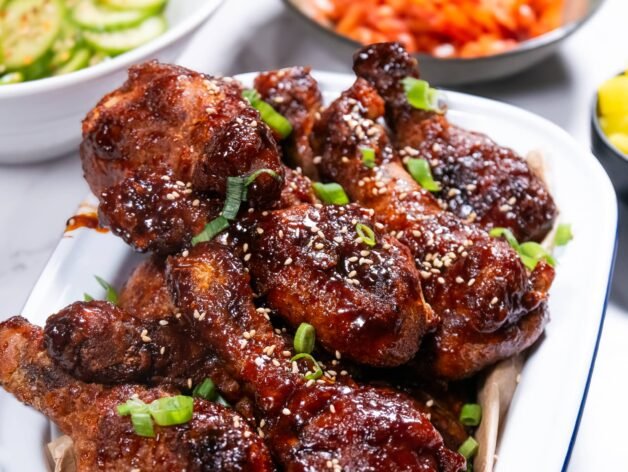
Why Are Korean Fried Chicken Drumsticks So Irresistible?
If you’ve ever bitten into a perfectly crispy piece of Korean fried chicken, you know how magical that first bite can be. Now imagine that crispy coating slathered in a rich, sweet-and-spicy sauce that keeps you coming back for more… and more.
Korean fried chicken isn’t just food – it’s a culinary experience. Its secret lies in the careful preparation: marination that ensures juiciness, double frying that guarantees crispiness, and glazing that delivers a harmonious blend of flavors.
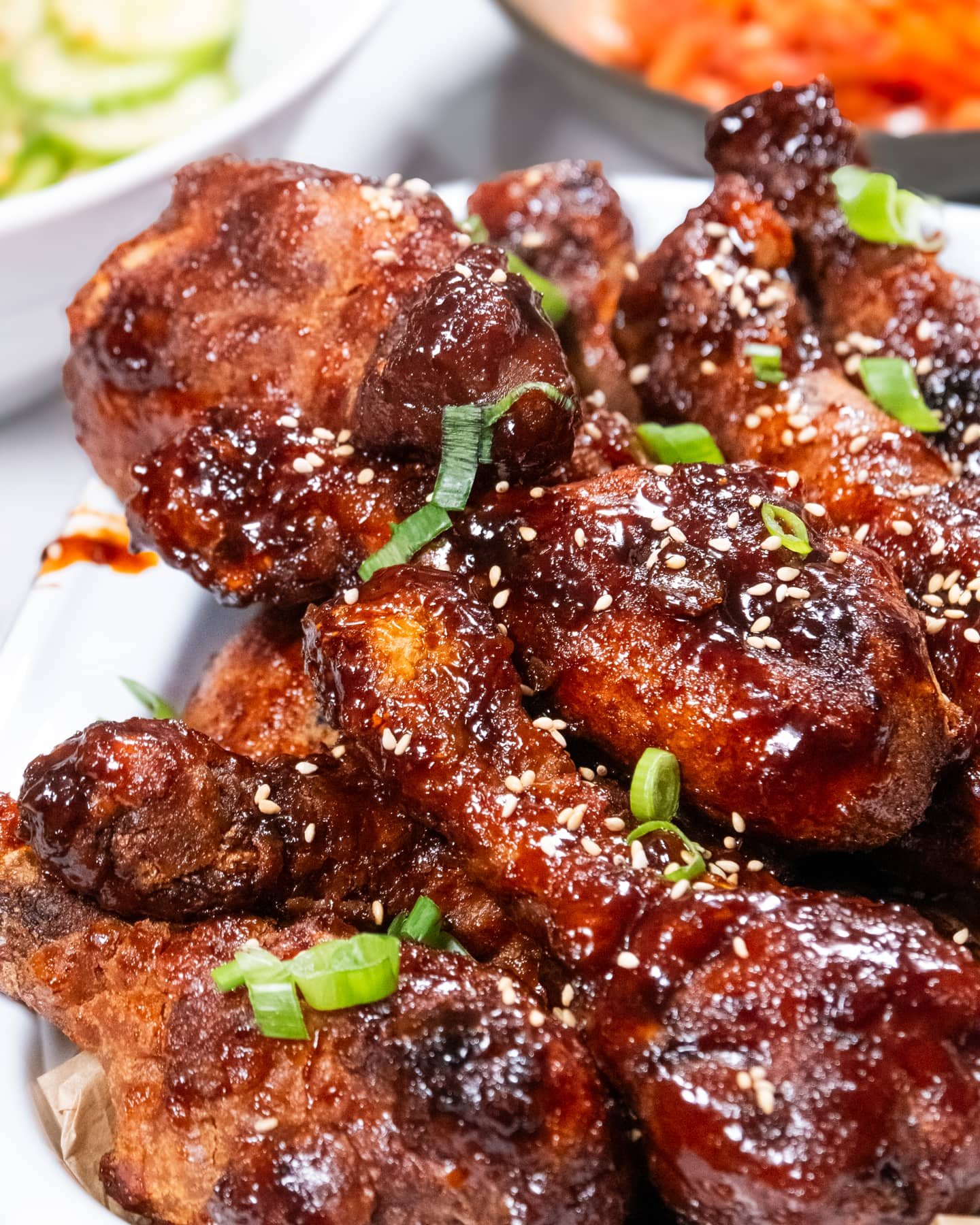
This recipe isn’t overly complicated, but it does require attention and care. So tie on your apron, gather your ingredients, and let’s embark on a flavorful journey straight to the heart of Korean fried chicken perfection.
Key Ingredients for Authentic Korean Fried Chicken
Chicken Drumsticks
Why drumsticks? Drumsticks are naturally juicy and flavorful, with a bone that helps retain moisture during frying. The skin crisps up beautifully, making them the perfect choice for this recipe.
Gochujang (Korean Fermented Chili Paste)
The soul of Yangnyeom sauce, this paste brings a signature spicy kick and deep, rich flavor.
Soy Sauce
Adds savory depth and enhances all other flavors, both in the marinade and the sauce.
Rice Wine (Mirin)
A subtle sweetness helps tenderize the meat while adding a refined flavor to the marinade.
Cornstarch
The secret to the perfectly crispy coating is that cornstarch creates a light yet firm crust around the chicken.
Honey & Brown Sugar
These balance out the spice, creating the ideal sweet-and-spicy flavor profile in the sauce.
Ginger & Garlic
These aromatic ingredients add freshness and depth to both the marinade and the sauce.
Step-by-Step Guide to Perfect Korean Fried Chicken
Step 1. Marinating the Chicken for Maximum Flavor and Juiciness
Marination is the first and most important step in creating irresistibly flavorful drumsticks. In a large bowl, combine soy sauce, mirin, ginger, garlic, and sugar, then add the chicken drumsticks. Make sure each drumstick is thoroughly coated in the marinade, using your hands or a spoon to ensure even coverage.
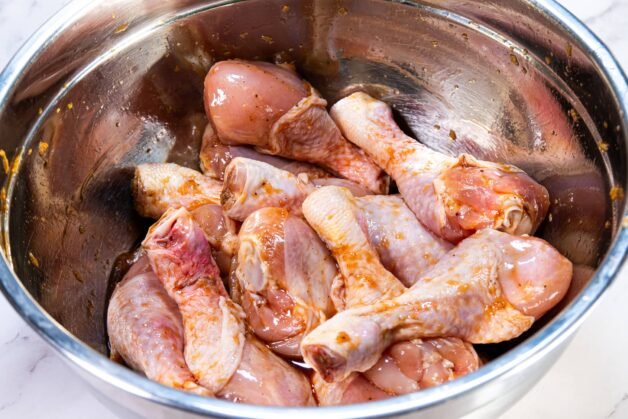
Once well mixed, cover the bowl with plastic wrap and let the drumsticks rest in the refrigerator for 2 to 4 hours. This allows the flavors to deeply penetrate the meat, ensuring every bite is tender, juicy, and packed with bold, savory goodness.
Step 2. Preparing the Crispy Coating
The crispy coating is the foundation of that irresistible crunch in Korean fried chicken drumsticks. Once the chicken has finished marinating, add cornstarch, all-purpose flour, salt, pepper, egg, and baking soda directly into the bowl with the drumsticks.
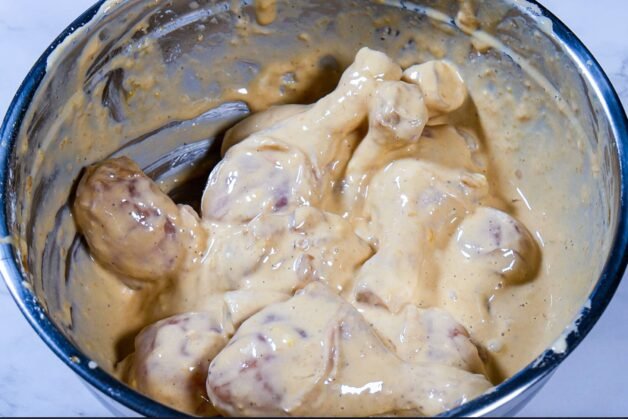
Using your hands or a large spoon, mix everything thoroughly until each drumstick is evenly coated in the batter. Make sure the batter clings to every part of the chicken, creating a thick, smooth layer that will fry up beautifully golden and crispy.
Step 3. First Fry – Building the Crispy Foundation
The first fry is all about cooking the chicken evenly and building a strong foundation for the crispy exterior. Heat your frying oil to 340°F (170°C) in a large pot or deep fryer.
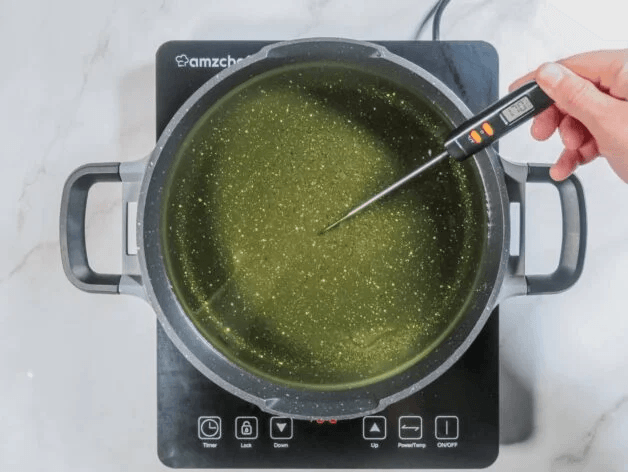
Carefully place the coated drumsticks into the hot oil in small batches to avoid overcrowding. Fry for 12–14 minutes, turning occasionally, until the drumsticks are golden and cooked through.
Check for doneness: Use a meat thermometer to ensure the internal temperature of the thickest part of the drumstick has reached at least 165°F (74°C).
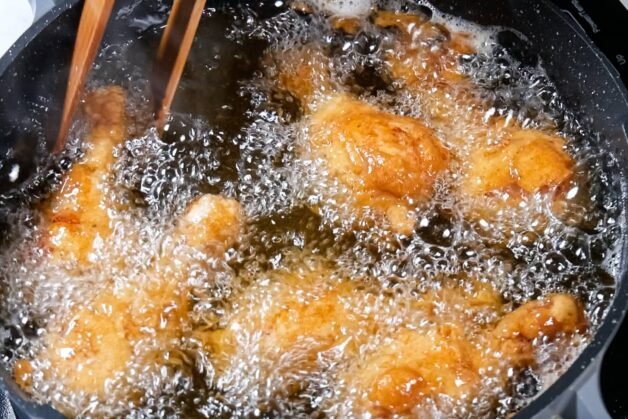
Once done, transfer the drumsticks to a wire rack or paper towel-lined tray to drain excess oil.
Step 4. Second Fry – Achieving Ultimate Crispiness
The second fry is where the magic happens! Increase the oil temperature to 375°F (190°C) and carefully return the drumsticks to the hot oil.
Fry them for an additional 3–5 minutes, or until they turn a deep golden brown and the coating feels firm and incredibly crispy.
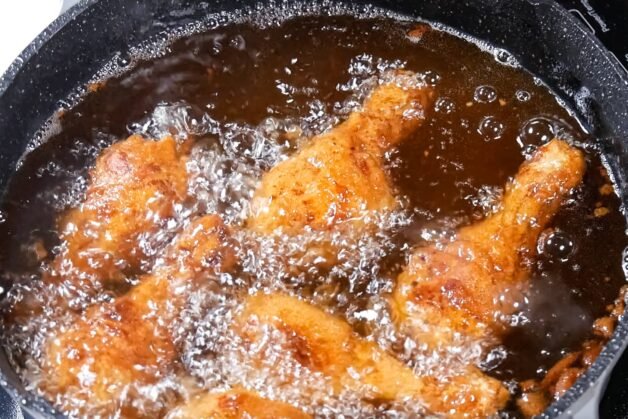
This step eliminates excess moisture from the first fry, locking in that perfect crunch that stays crispy even after being coated in sauce.
Once fried, transfer the drumsticks back to the wire rack to drain any remaining oil.
Tip: Keep a close eye on the drumsticks during this step to prevent over-browning.
Step 5. Yangnyeom Sauce – The Heart of the Flavor
The Yangnyeom sauce is where all the bold flavors come together. In a skillet over medium heat, combine gochujang, honey, soy sauce, rice vinegar, minced garlic, and grated ginger. Stir continuously until the mixture begins to bubble and thicken into a glossy glaze.
The sauce should be thick enough to coat a spoon, but still fluid enough to evenly cover the drumsticks.
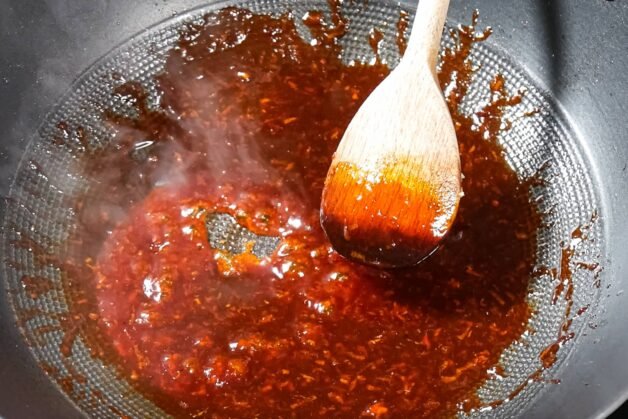
Tip: Taste the sauce and adjust the seasoning if needed—add more honey for sweetness, or more gochujang for heat.
Step 6. Glazing and Final Touches
This final step transforms the crispy drumsticks into a sweet-and-spicy masterpiece. While the drumsticks are still warm, pour the Yangnyeom sauce over them in a large bowl. Gently toss until each drumstick is evenly coated in the sticky, flavorful glaze.
Arrange the drumsticks on a serving platter and sprinkle with toasted sesame seeds and freshly chopped green onions for an extra layer of texture and aroma.
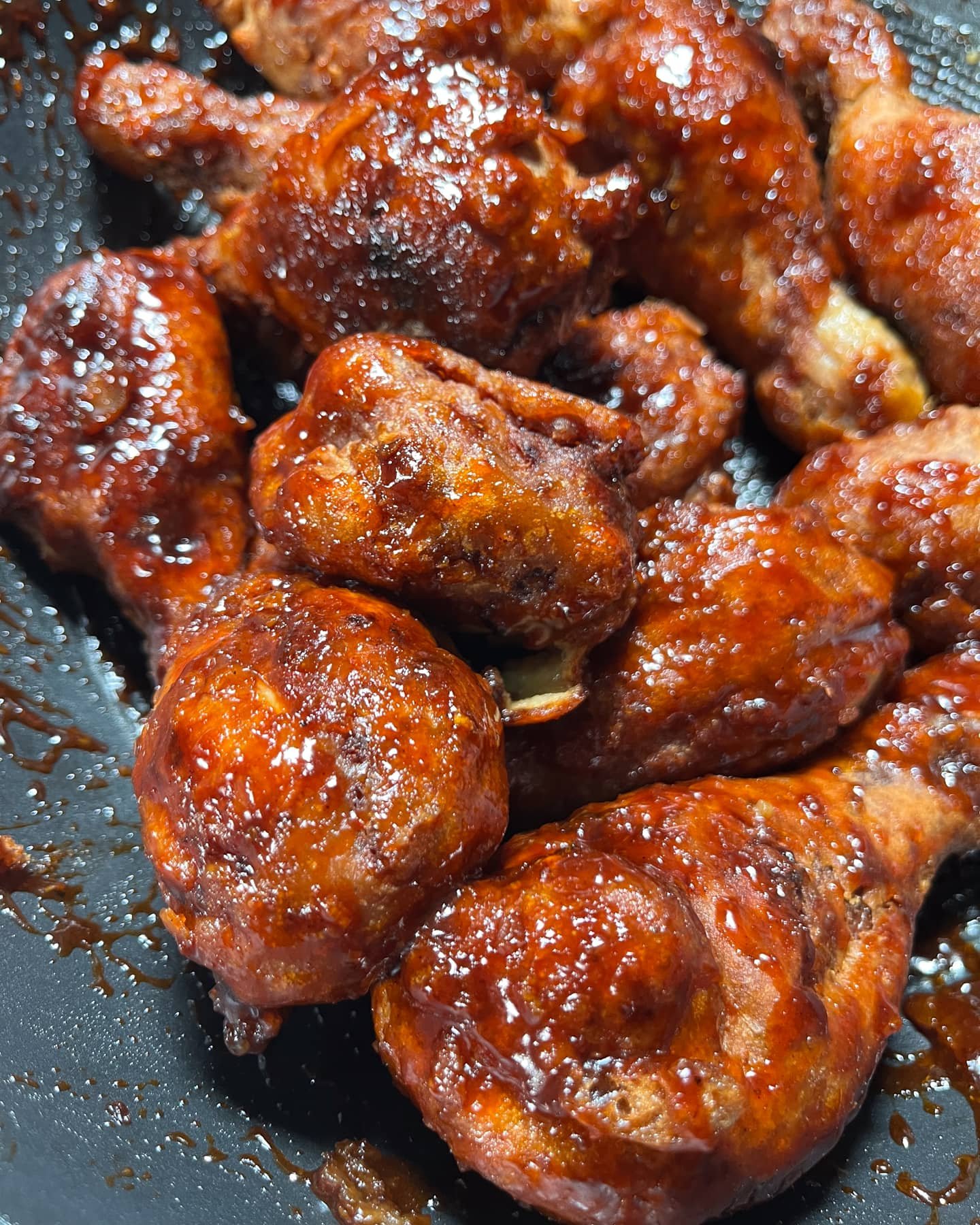
Tip: Serve the drumsticks immediately to enjoy the full contrast of crispy coating and sticky sauce.
Now, all that’s left is to dig in and savor every spicy, sweet, and crispy bite!
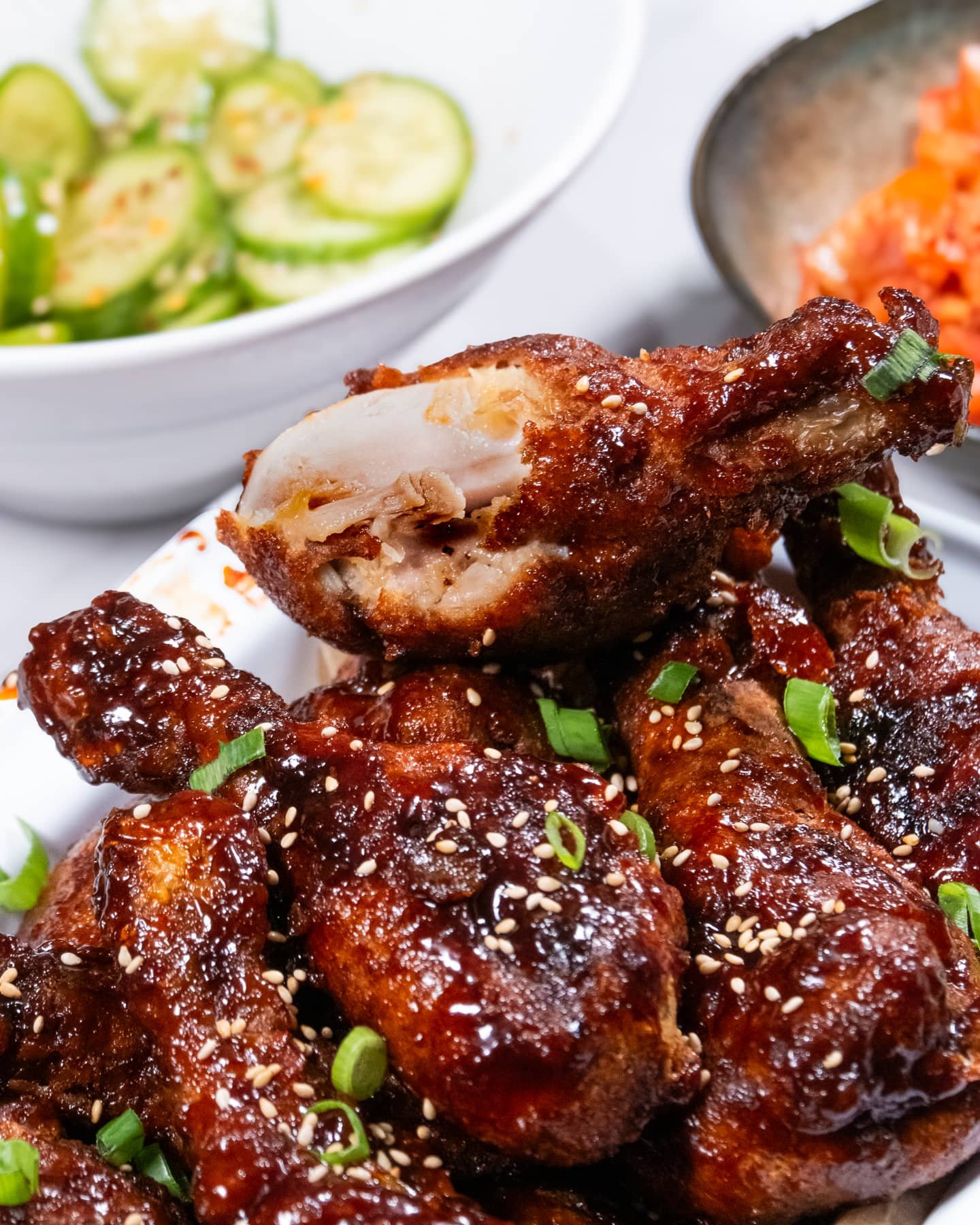
What to Serve with Korean Fried Chicken? Perfect Side Dishes and Drinks
Korean fried chicken drumsticks with Yangnyeom sauce are already a showstopper, but the right sides and drinks elevate them to an unforgettable meal. Korean cuisine is all about balancing flavors – spicy, salty, sweet, and refreshing – and these pairings hit all the right notes.
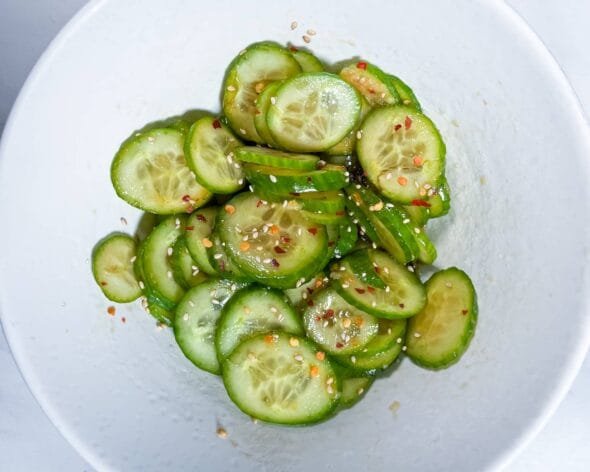
Korean Cucumber Salad (Oi Muchim)
A quick, refreshing salad made with crisp cucumbers, soy sauce, sesame oil, garlic, and chili flakes balances the bold flavors of the chicken perfectly.
Kimchi – Fermented Korean Cabbage
Kimchi isn’t just a side dish – it’s a cornerstone of Korean cuisine. Its spicy, tangy flavors cleanse your palate between bites of rich fried chicken.
Tip: For an authentic experience, buy fresh kimchi from an Asian grocery store or make your own.
Steamed White Rice
Simple steamed rice is a neutral companion that balances out the bold flavors of the chicken and sauce while soaking up every delicious drop of glaze.
Tip: Use sticky, short-grain rice for the most authentic experience.
Pickled Daikon (Danmuji)
Slightly sweet and tangy, pickled daikon radish cuts through the richness of the fried chicken, offering a refreshing contrast.
Tip: You can find it in most Asian grocery stores labeled Danmuji.
Cold Beer (Maekju)
The term “chimaek” (chicken + maekju) is iconic in Korea. A crisp, cold beer complements the sweet and spicy notes of Yangnyeom sauce perfectly.
Tip: A light lager pairs best for a classic combo.
Frequently Asked Questions (FAQ) About Korean Fried Chicken
1. Can I use a different cut of chicken instead of drumsticks?
Absolutely! You can use wings, chicken thighs, or even a whole chicken cut into pieces. Just adjust the frying time – breasts need less time, while wings require careful attention to prevent burning.
2. Is double frying really necessary?
Yes! The first fry cooks the chicken and forms a base crust, while the second fry removes moisture and creates a signature crispy texture.
3. Can I reduce the spiciness of the Yangnyeom sauce?
Definitely! Use less gochujang and add a bit more honey or sugar to mellow out the heat.
4. How long can I store leftovers?
For best results, eat immediately. However, you can store leftovers in the fridge for up to 2 days and reheat them in the oven to maintain some crispiness.
A Culinary Journey Worth Taking
Korean fried chicken drumsticks with Yangnyeom sauce are more than just a dish – they celebrate flavors and textures. Whether paired with steamed rice, cucumber salad, or an ice-cold beer, every bite tells a delicious story.
Cook them for family, friends, or as a special treat for yourself – you deserve every crunchy, saucy bite!
If you tried this recipe, share your experience in the comments or tag your photos on Instagram with #FoodieRoam.
Enjoy every bite!
Korean fried chicken drumsticks
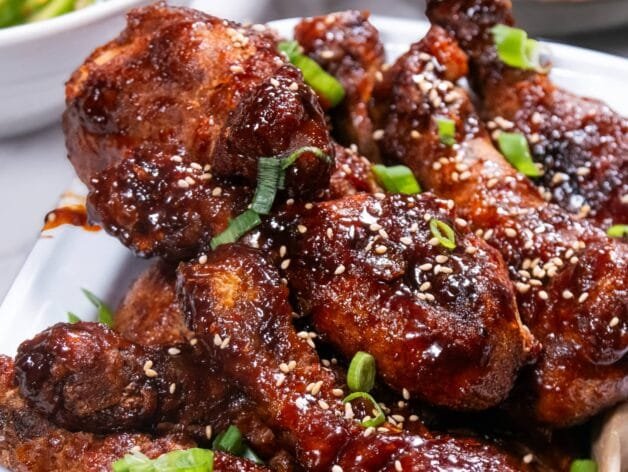
Crispy and juicy Korean fried chicken drumsticks coated in a sweet-and-spicy Yangnyeom sauce. Double-fried for the perfect crunch and packed with bold flavors.
- Large mixing bowl
- Deep Fryer or Large Pot
- Wire rack
- Tongs
- Large skillet or wok
- Meat Thermometer
For the Marinade:
- 2 lbs (1 kg) chicken drumsticks
- 3 tbsp (45 ml) soy sauce
- 1 tbsp (15 ml) rice wine (- mirin)
- 1 tsp grated ginger
- 2 cloves garlic (minced)
- 1 tsp sugar
- A pinch of black pepper
For the Coating:
- 1 cup (120 g) cornstarch
- ½ cup (60 g) all-purpose flour
- 1 tsp salt
- 1 tsp ground black pepper
- 1 large egg
- ⅓ tsp baking soda
For the Yangnyeom Sauce:
- 3 tbsp (45 g) gochujang (Korean chili paste)
- 2 tbsp (30 ml) honey
- 2 tbsp (28 g) brown sugar
- 2 tbsp (30 ml) soy sauce
- 2 tsp (10 ml) rice vinegar
- 2 cloves garlic (minced)
- 1 tsp grated ginger
- 1 tbsp (15 ml) sesame oil
For Garnish:
- 1 tbsp toasted sesame seeds
- 2 green onions (chopped)
For Frying:
- Vegetable oil (for deep frying (enough to submerge drumsticks))
- In a large bowl, combine soy sauce, rice wine, ginger, garlic, sugar, and black pepper. Add the chicken drumsticks and mix thoroughly, ensuring each piece is evenly coated. Cover the bowl with plastic wrap and refrigerate for 2–4 hours (or overnight) to allow the flavors to fully penetrate the meat.
Add cornstarch, flour, salt, pepper, eggs, and baking soda directly into the bowl with the marinated drumsticks. Mix everything well, ensuring each drumstick is evenly coated in the thick batter. This coating will create the signature crispy crust during frying.
- Heat the oil in a deep fryer or large pot to 340°F (170°C). Fry the drumsticks in batches for 12–14 minutes, turning occasionally, until golden brown and cooked through. Transfer them to a wire rack to drain excess oil. Check that the internal temperature has reached 165°F (74°C).
- Increase the oil temperature to 375°F (190°C). Return the drumsticks to the hot oil and fry for an additional 3–5 minutes until they’re deep golden and extra crispy. Transfer them back to the wire rack to drain any excess oil.
- In a skillet over medium heat, combine gochujang, honey, brown sugar, soy sauce, rice vinegar, garlic, ginger, and sesame oil. Stir until the sauce thickens and becomes glossy. Adjust sweetness or spiciness if needed.
- Place the hot drumsticks in a large bowl, pour the warm Yangnyeom sauce over them, and toss gently until evenly coated. Garnish with toasted sesame seeds and chopped green onions. Serve immediately while hot and crispy.
Marination Time: For the best flavor, marinate the drumsticks for at least 2-4 hours, ideally overnight.
Double Frying: The first fry cooks the chicken thoroughly, while the second fry ensures an ultra-crispy texture.
Oil Temperature: Maintain 340°F (170°C) for the first fry and 375°F (190°C) for the second fry.
Sauce Coating: Toss the drumsticks in the sauce while they are still hot to ensure even glazing.